
5 signs it is time to update my website
You may not see the need to perform regular updates on your small business website.
Well, you may not, but the hackers that want to gain access to your site sure do. And they’re hoping you won’t, and that you’ll leave yourself open to attack.
Your customers will see the need too, when they leave your site because it looks dated and unprofessional. Or because they can’t find the information they need.
Every business owner knows: there’s no part of your business that you can leave alone… if you expect it to perform well. You need to stay invested and keep your site updated and current.
So how can you tell when it’s time to update your small business website? Here are top signs that it’s time for an update.
1. You can't remember the last time you update it

While there’s no hard-and-fast rule for how often you should completely overhaul your website, consider how quickly technology and consumer preferences change. A site launched five years ago with no major cosmetic, functional, or UX updates will likely appear old and clunky to the user. That can immediately discredit your brand, and encourage highly qualified prospects to hit the back button and look elsewhere.
If your last website update hasn’t been done in recent memory, chances are your site is looking dated. More than likely, you’ll have some broken links and some faulty pages. And, almost certainly, you’ll be dealing with out-of-date plugins and themes.
It’s never too late to get up to date, so get your website into gear and keep it there. Make sure you’re keeping your eye on current tech trends and have a team that can keep your site fresh and relevant.
2. Your website speed is slow
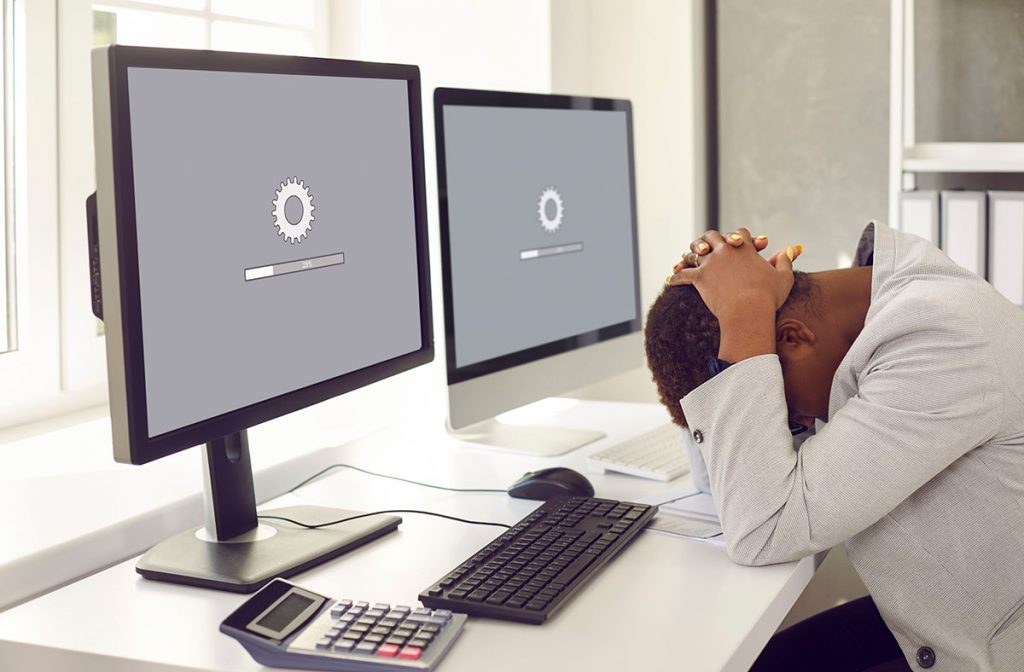
In a recent study, Google found that 53% of visitors were likely to abandon a site that took over 3 seconds to load. The average site? It takes 22 seconds.
Think about it from your own perspective. If you try and access a website and you watch the spinning wheel go for 5, 10, 20, 30 seconds, chances are you’re going to think that the site is broken and navigate away from the page to find a different Google result.
So, when it comes to your page load speed, remember that slow and steady does not win the race for more customers. Keep your website updated so that it’s moving quickly!
3. Not optimized for mobile
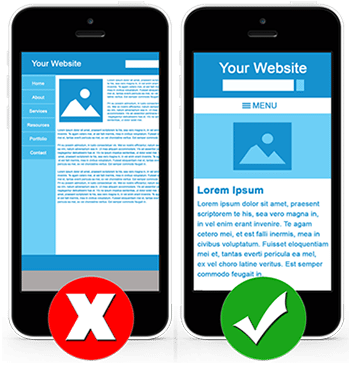
The way people use the internet is constantly changing, and one of the big changes in recent years is the prevalence of internet searching on mobile devices. Over 60% of searches are happening on mobile devices. And 40% of those mobile searches have local intent… these are folks who are looking for an immediate local solution to an issue.
So if your website hasn’t been updated so that it’s easy to use on a mobile device, you have the potential to lose all of that business to a competitor.
Do you have to pinch and zoom to read your site on a phone screen? Does it take a long time to load? All of these things are major issues that can drive people on mobile devices away from your site… and away from your business.
4. Your website is not performing well in search engines
Okay, this one’s a no-brainer. People can’t buy from you if they can’t find you.
One of the biggest questions we get from people is “How can we appear in Google search results” which is a great question, with a complicated answer. But it’s part of the much bigger question: “How can we get more people to find our website?”
Appearing in search results is achieved by publishing content (think: website pages, videos, blog posts, case studies, pillar pages) that is optimized for what your prospects and buyers are searching for. Your content should answer the questions they’re asking, educate and build trust, and be used to have more informed sales conversations.
If your site isn’t ranking well in search right now, that’s likely a sign it’s time for an update. And keep in mind that low organic search performance doesn’t necessarily mean you’re looking at a full-blown website redesign. Consider these quick fixs:
- Create a content strategy focused on data-backed keyword research.
- Commit to a frequent publishing schedule.
- Create a Google Search Console account and submit your sitemap. This will help you identify which pages are ranking or not, and if there are any crawling issues.
- Check on-page factors using Google PageSpeed Insights.. This free tool will rank your overall website performance and identify issues across page load speeds, accessibility, general SEO best practices, and more.
The above list will arm you with actions as simple as resizing large images or identifying blog posts you can better optimize to see search engine results quickly.
5. Your website is susceptible to attacks

Nobody wants to be a target for attack. Most small businesses labor under the delusion that, because they are small businesses, they aren’t a real target for hackers.
Sorry. Your site can be under potential attack just by existing within a web application and using dated plugins.
Hackers are opportunists. They take whatever in they can find. So even if your business is small, or not very well known, it can still have a huge target hovering over it.
That’s the thing about web security: your website is only as safe as its weakest component. If an outdated theme or plugin allows a hacker to access your system, they can access your whole system
This is why it’s important to consistently update all the facets of your website, to be sure that you don’t give any evil forces on the web a toehold into your system.
If you think your website isn’t living up to its potential, we’d love to talk to you. At Zerodigital, we build, maintain, and accelerate websites to drive real, meaningful traffic to your business. Message us for a free site audit to learn where your website is doing well, where it’s falling behind, and how it can be improved to bring you better results.